International Conference on

Knowledge, Innovations and Technologies for Sustainability

(ICKITS 2026)

Theme of conference: Innovating Today, Sustaining Tomorrow: Knowledge and Technologies for a Better Future

19th -20th November 2026

Organized by

Department of Artificial Intelligence and Machine Learning, School of Computing
Mohan Babu University

About

The MBU

Mohan Babu University is a State Private University promoted by Sree Vidyanikethan Educational Trust under the leadership of Dr. M. Mohan Babu, Ex Rajyasabha Member, Producer, Cine Artiste, and great Philanthropist. The University is located in Tirupati, Chittoor District, Andhra Pradesh, India. MBU promotes excellence in all the frontiers of Engineering, Pharmacy, Liberal Arts & Sciences, Agriculture, Education, Journalism, Management, Performing and Arts, MB Film Academy, Paramedical and Health Sciences.
MBU’s advanced curriculum, expert mentorship, best-in-class facilities with a safe 5-star rated campus, and 65+ clubs are poised to help students innovate, learn, and lead the next, today. In a constantly changing world, only talent that is future-ready can take the baton ahead. Therefore, MBU focuses on delivering a unique blend of academic brilliance, discipline and dynamism. Groomed in such an inspiring culture, a community of thousands of students is preparing for a future of success. We are pleased to see them soar high with rewarding opportunities in companies like Google and Amazon this academic year. We are confident that each one of our students is nurtured and well supported to make a difference in a unique way.
Formerly known as Sree Vidyanikethan Engineering College, the University is known for its quality initiatives which are amply reflected in accreditations by National Board of Accreditation (NBA) for UG & PG programmes and National Assessment and Accreditation Council (NAAC) with ‘A+’ Grade. The college participated in National Institution Ranking Framework (NIRF) 2025 and ranked in 201-300 Band. It has also secured the coveted Diamond band in the QS-IGauge. NAAC A+ and NBA accreditations further validate its academic prowess, along with a platinum category distinction in the AICTE-CII survey. Remarkably, the university has emerged among the top 20 in the 2023 SII Green Rankings, showcasing its commitment to sustainability. The college is ranked in the EXCELLENT Band in its maiden attempt in ARIIA rankings 2021 under Private/Self Financing colleges (Technical) category. The college is one among the 49 selected institutions across India selected by AICTE for establishing IDEA Lab on the campus with a funding of Rs 1.13 Crores from AICTE, Host institute and Industry during the year 2021. Attained Platinum status in AICTE-CII Survey for having high industry linkages in 2017, 2018, 2019, and 2020 consecutively and placed in the “Excellent” band in ARIIA 2021, has been accorded “College with Potential for Excellence” status by UGC, has been selected as the mentor institution by IIC, MoE Govt of India, Mentor institution for 10 Engineering Colleges under AICTE Margdarshan Scheme, Recognized as one of the Best performing institutions from South Zone by Institution The Innovation Council (IIC), Received Rs 3.61 Crores under the Science, Technology and Innovation Hub by DST.
The University has academic collaborations with the top 100 global universities such as the University of Wisconsin (USA) and RWTH Aachen (Germany), facilitating student exchange and study abroad programs to enrich the educational experience.
A student-centric pedagogy, project-based approach and design-driven curriculum provide students with an inclination for complex problem-solving, design, innovation, and a passion for learning. The focus on innovation and entrepreneurship gives students an edge, allowing them to create inventions, start businesses, and design solutions to global problems – all before graduation. Integral to this success story is the faculty’s dedication to teaching, the scholarship program for the needy, the support of alumni, industrial advisory boards, and employers; and the state-of-the-art facilities, which provide students with a solid foundation for achievement.

About Artificial Intelligence and Machine Learning Department

The Department of Artificial Intelligence and Machine Learning offers a four-year professional B.Tech. Program in Computer Science and Engineering (Artificial Intelligence and Machine Learning) and Computer Science and Engineering (Artificial Intelligence and Data Science). The program emphasizes acquiring knowledge and contemporary skills on computing systems and developing software through experiential learning relevant to the domain of Artificial Intelligence and Machine Learning. The program focuses on a student-centric learning approach through classroom study, industry-based internships, and project-work in core and advanced courses. The courses offered in the program include the core subjects of Computer Science and specialized courses like Intelligent Systems, Pattern Recognition, Machine Leaning, Deep Learning, Cognitive Systems, Robotics and Automation, Business Intelligence, and other courses in cutting-edge technologies.
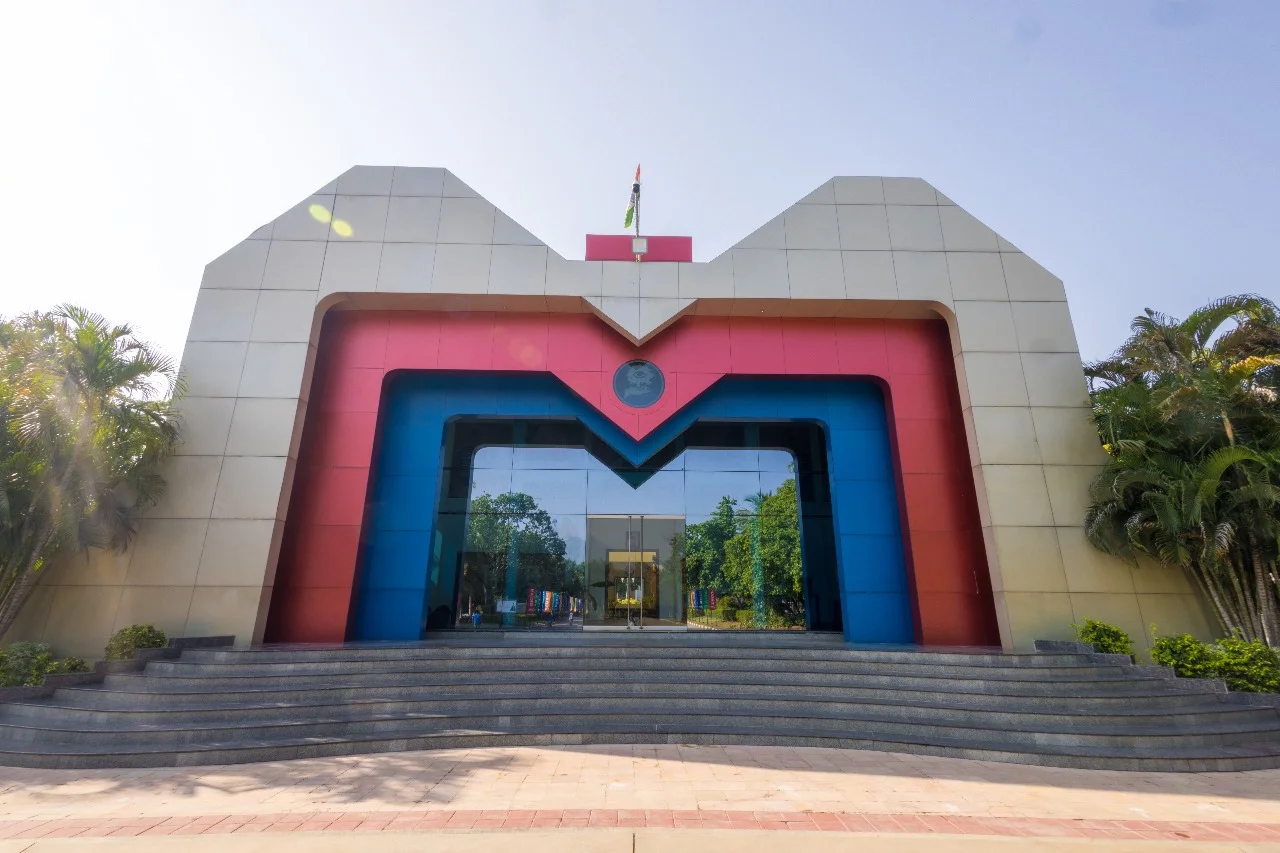
About Image
2026 MBU ICKITS
About the Conference

International Conference on Knowledge, Innovations and Technologies for Sustainability (ICKITS 2026) has emerged as an enduring techno-platform to connect education experts and passionate educators all over the nation for improving the potential for excellence in engineering education. It provides a premier interdisciplinary forum for researchers, engineers and academicians to present and gain knowledge on the most recent trends, innovations, and technologies and solutions adopted for sustainable development.
The conference also focuses on mutually sharing the advances and innovative technologies for the scientists, scholars, engineers and students from different universities and industry to present ongoing research activities, focused on solutions to achieve the Sustainable Development Goals (SDGs) and hence to foster collaborations among stakeholders and researchers from distinct universities, national laboratories, government funding bodies and the industry. Sustainable development is the idea that human societies must live and meet their needs without compromising the ability of future generations. Sustainable development is a way of organizing society so that it can exist in the long term, taking into account both the imperatives present and those of the future. Much effort is needed from researchers to achieve SDGs and a clear need to go beyond. ICKITS 2026 aims to gain valuable insights and contributions from researchers and practitioners facilitating interdisciplinary perspectives.

The Objectives of the Conference:

  • To explore emerging technologies and innovative solutions that contribute to sustainable development and address global challenges.
  • To promote interdisciplinary research and collaboration among academia, industry, research organizations, and policymakers.
  • To encourage the application of Artificial Intelligence, Machine Learning, Data Science, IoT, and other emerging technologies for developing sustainable solutions.
  • To facilitate discussions on innovative approaches and best practices in sustainable healthcare, education, agriculture, economy, cities, and society.
  • To encourage young researchers and students to present their research, innovative ideas, and technological solutions for a sustainable future.
  • To strengthen national and international research collaborations and promote knowledge sharing among experts from diverse disciplines.
  • To contribute towards achieving the United Nations Sustainable Development Goals (SDGs) through knowledge, innovation, research, and technology.
Call for papers

ICKITS 2026 has been widely deployed to discuss Innovations and Technologies to achieve Sustainable Development Goals by United Nations. Contributions are invited across all the disciplines of Engineering toward the Sustainable Society, Sustainable Technology & Education, Sustainable economy, Sustainable health care, sustainable cities, Sustainable Engineering, Sustainable Infrastructure, Sustainable Manufacturing and Sustainable living, but not limited.

1.Foundation and Frontiers of Artificial Intelligence for Sustainable Futures

  • Trustworthy and explainable AI for real-world decision systems
  • Generative AI for sustainable design, planning, and innovation
  • Human-AI collaboration and intelligent user experience design
  • Ethical, legal, and governance frameworks for responsible AI
  • AI adoption strategies for resilient and sustainable organizations

2. Next-Generation Machine Learning and Deep Learning Systems

  • Sustainable and energy-efficient machine learning architectures
  • Federated, edge, and privacy-preserving learning systems
  • Fairness, accountability, and bias mitigation in ML models
  • Reinforcement and self-supervised learning for dynamic environments
  • Hybrid deep learning models for complex intelligent applications

3. Smart Agriculture, Food Systems, and Rural Innovation Technologies

  • Precision agriculture using AI, IoT, and data-driven decision systems
  • Satellite, drone, and sensor-based crop monitoring and yield analytics
  • Climate-smart farming technologies for resilient food production
  • Blockchain-enabled agricultural traceability and food transparency
  • AgriTech policy, rural innovation ecosystems, and sustainable livelihoods

4. Digital Twins and Intelligent Simulation for Sustainability

  • Digital twins for smart manufacturing and infrastructure systems
  • Urban digital twins for planning and sustainability assessment
  • Twin-driven optimization in healthcare, agriculture, and energy
  • Simulation-based forecasting for complex socio-technical systems
  • Data fusion and real-time synchronization for digital twin ecosystems

5. Responsible Innovation, Policy, and Technology Foresight

  • Governance of emerging technologies in uncertain futures
  • Responsible research and innovation for sustainable development
  • Scenario planning and technology foresight for policymakers
  • Standards, regulations, and compliance in digital transformation
  • Cross-sector policy frameworks for sustainable technological growth

6. Data Science, Decision Intelligence, and Sustainable Analytics

  • Big data platforms for sustainability intelligence
  • Decision support systems for complex policy and management problems
  • Visual analytics for climate, health, and urban systems
  • Responsible data ecosystems and open knowledge platforms
  • Predictive analytics for sustainable organizational transformation

7. Circular Economy, Smart Materials, and Sustainable Industrial Innovation

  • Intelligent systems for waste reduction, recycling, and resource recovery
  • Circular manufacturing models enabled by digital technologies
  • Smart and sustainable materials for future engineering applications
  • Lifecycle assessment and eco-design for industrial systems
  • Industrial symbiosis and data-driven sustainability optimization

8. Quantum Technologies, Advanced Devices, and Photonic Systems

  • Quantum computing frameworks for sustainable optimization problems
  • Silicon photonics and next-generation optical communication systems
  • Advanced semiconductor devices, memory, and logic architectures
  • 2D materials, heterogeneous integration, and nanoelectronic fabrication
  • Scalable quantum hardware, packaging, and fault-tolerant systems

9. Cybersecurity, Digital Trust, and Privacy Engineering

  • AI-enabled cyber threat intelligence and autonomous defense systems
  • Cyber resilience in critical infrastructure and industrial ecosystems
  • Privacy-preserving analytics, anonymization, and differential privacy
  • Digital forensics, anomaly traceback, and attack attribution
  • Cyber policy, governance, and economics of data protection

10. Advancing Blockchain and Distributed Technologies

  • Blockchain scalability and consensus protocols
  • Energy-efficient blockchain alternatives (PoS, DAGs)
  • Interoperability between blockchain networks
  • Regulatory outlook for blockchain integration
  • Blockchain for supply chain traceability

Team

Conference Committee
Chief Patrons

Dr. M. Mohan Babu

Chancellor, MBU | Chairman (SVET)

Mr. Vishnu Manchu

Pro-Chancellor, MBU | CEO (SVET)
Patrons

Mr. Vinay Maheswari

Executive Director, MBU

Prof. P. V. Ramana

Vice Chancellor (In-Charge), MBU

Mr. Vikas Singh

CGSO, MBU

Dr. K. Saradhi

Registrar, MBU
Chief Advisors

Dr. S. Babu Devasenapati

Dean, SOC & SOE, MBU

Dr. Avireni Srinivasulu

Dean, R & I, MBU
General Chair

Dr.V.Anantha Natarajan

HOD, AI & ML, MBU
Key Speakers

CHIEF GUEST

Dr.Debasis Samantha

Professor,
Department of Computer Science and Engineering,
Indian Institute of Technology Kharagpur, India.

GUEST OF HONOR

Dr. Damodar Reddy Edla

Associate Professor,
Department of Computer Science and Engineering,
National Institute of Technology (NIT) Goa.

KEY NOTE SPEAKER

Mr.Phaneendra Nath

Machine Learning Engineer,
American Express, Sunnyvale,
California,
United States.

KEY NOTE SPEAKER

Dr. Jehan Murugadhas

Senior Networking and Cybersecurity Specialist,
Network Computing and Cyber Security Unit,
College of Computing and Information Sciences,
University of Technology and Applied Sciences-Nizwa, Sultanate of Oman.
Convener

Dr. K. Padmaja

AI & ML, MBU

Dr. K. Kavitha

AI & ML, MBU
International Advisory Committee

Dr. Ravi Naidu

Ireland, University of Newcastle, Australia

Mr. Srinivas Nowduri

Pueblo, Colorado, United States of America.

Prof (Dr.) Pedro Fonte

Professor, Faculty of Sciences and Technology, University of Algarve, Faro, Portugal

Professor (Dr.) Venkateshwar Madka

Center for Cancer Prevention and Drug Development, Hem-Onc, Department of Medicine, University of Oklahoma HSC, Oklahoma, USA

Prof (Dr.) Kamal Dua

Discipline of Pharmacy, Graduate School of Health University of Technology Sydney (UTS), Ultimo, Australia

Prof (Dr.) Jen-Chang Yang

Vice-Dean, College of Biomedical Engineering, Graduate Institute of Nanomedicine and Medical Engineering, College of Biomedical Engineering, Taipei Medical University, New Taipei City, Taiwan

Prof (Dr.) Dr. Yi Li

Vice Dean, College of Environment Director, Hohai University, Nanjing, China

Prof (Dr.) Baojun (Bruce) Xu

Chair Professor, Department Head, Programme of Food Science and Technology, Department of Life Sciences, Faculty of Science and Technology, Beijing Normal-Hong Kong Baptist University, China

Prof (Dr.) Zhen Fang

Biofuel Institute, School of Environment, Jiangsu University, Zhenjiang, China

Prof (Dr.) Kamani Hemamala Tennekoon

Professor of Biochemistry, Institute of Biochemistry, Molecular Biology and Biotechnology (IBMBB), University of Colombo, Colombo, Sri Lanka

Prof (Dr.) Mariyam Shahuneeza Naseer

The Maldives National University, Male, Republic of Maldives

Dr. Asadi Srinivasulu

BlueCrest University, Sinkor Road, Monrovia, Liberia

Dr. Sivaram Rajeyyagari

Shaqra University, Shaqra, Saudi Arabia

Dr. Indrani Palanisamy

University of Technology and Applied Sciences, Oman

Dr. Jehan Murugadhas

University of Technology and Applied Sciences, Oman

Dr. Sekhar Amba

New York Institute of Technology, Vancouver, Canada

Dr. Thirupathi Regula

Muscat, Sultanate of Oman

Dr. Gulab Singh Chauhan

Karakul, Uzbekistan
National Advisory Committee

Dr. R. Balasubramanian

IIT Roorkee, Uttarakhand

Dr. RBV Subramanyam

NIT Warangal, Telangana

Dr. P. Viswanadh

IIIT Sricity, Tirupati

Dr. G. C. Nandi

IIIT, Allahabad, Jhalwa, Uttar Pradesh

Dr. A. Vinaya Babu

JNTUH, Hyderabad

Dr. S. Viswanadha Raju

JNTUHCEJ, Jagityal, Karimnagar

Dr. G. Madhavi

JNTU Vizianagaram

Dr. Y. Kishore Kumar Babu

JNTU Vizianagaram

Mr. Prokash Barman

Brainware University, West Bengal

Dr. Sai Krishna

NIT Warangal

Dr. Anupam Agrawal

IIIT, Allahabad

Dr. G Narsimha

JNTUH University College of Engineering, Jagtial

Dr. Praveen Shukla

BBD University, Lucknow

Dr. B. Eswar Reddy

JNTUA College of Engineering, Ananthapuramu

Dr. Biswajit Purkayastha

NIT Silchar

Dr. Arup Bhattacharya

NIT Silchar

Dr. Pradip Kr. Das

IIT Guwahati

Dr. Gautam Kumar

NIT Delhi

Dr. Binoy Krishna Roy

NIT Silchar

Dr. N. Duraimutharasan

REVA University, Bengaluru

Dr. C. Shoba Bindhu

JNTUA, Ananthapuramu

Dr. K. F. Bharathi

JNTUA, Ananthapuramu

Dr. B V A N S S Prabhakar Rao

VIT, Chennai

Dr. SM Farooq

VIT, Vellore

Dr. Ravi Kumar Poluru

VIT, AP

Dr. G Suryanarayana

Symbiosis International (Deemed University), Pune

Dr. A. Satya Sai Kumar

Maulana Azad National Urdu University, Hyderabad
Technical Program Committee

Dr. J. Avanija

Professor, AI & ML, MBU

Dr. P. Dhanalakshmi

Professor, AI & ML, MBU

Dr. V. Bapuji

Professor, AI & ML, MBU

Dr. V. Balaji

Assoc. Professor, AI & ML, MBU

Dr. G. Vennila

Asst. Professor, AI & ML, MBU

Dr. K. Padmaja

Assoc. Professor, AI & ML, MBU

Dr. K. Kavitha

Assoc. Professor, AI & ML, MBU
Editorial / Publication Committee

Dr. J. Avanija

Professor, AI & ML, MBU

Dr. P. Dhanalakshmi

Professor, AI & ML, MBU

Dr. V. Bapuji

Professor, AI & ML, MBU

Dr. V. Balaji

Assoc. Professor, AI & ML, MBU

Dr. G. Vennila

Asst. Professor, AI & ML, MBU

Dr. K. Padmaja

Assoc. Professor, AI & ML, MBU

Dr. K. Kavitha

Assoc. Professor, AI & ML, MBU
Finance Committee

Dr. G. Vennila

Asst. Professor, AI & ML, MBU

Mr. M. Chiranjeevi

Asst. Professor, AI & ML, MBU

Ms. B. Rajani

Asst. Professor, AI & ML, MBU
Registration Committee

Mr. Naveen Kumar

Asst. Professor, AI & ML, MBU

Mr. Rahil Hussain

Asst. Professor, AI & ML, MBU

Mr. C. Sudarshana Reddy

Asst. Professor, AI & ML, MBU
Hospitality and Accommodation Committee

Mr. Ranjeet Kumar

Asst. Professor, AI & ML, MBU

Mr. B. Raveendra Naick

Asst. Professor, AI & ML, MBU
Transport and Logistics Committee

Mr. Ranjeet Kumar

Asst. Professor, AI & ML, MBU

Mr. B. Raveendra Naick

Asst. Professor, AI & ML, MBU
Reception Committee

Ms. Ghamya

Asst. Professor, AI & ML, MBU

Ms. K. Sandhya

Asst. Professor, AI & ML, MBU
Stage Management Committee

Ms. Ghamya

Asst. Professor, AI & ML, MBU

Ms. K. Sandhya

Asst. Professor, AI & ML, MBU

Ms.JayaDeepthi

Asst. Professor, AI & ML, MBU
Publicity and Media Committee

Dr. V. Balaji

Assoc. Professor, AI & ML, MBU

Mr. M. Chiranjeevi

Asst. Professor, AI & ML, MBU
Website and IT Support Committee

Dr. V. Balaji

Assoc. Professor, AI & ML, MBU

Mr. M. Chiranjeevi

Asst. Professor, AI & ML, MBU
Cultural and Entertainment Committee

Ms. Jaya Deepthi

Asst. Professor, AI & ML, MBU

Ms.B.Rajani

Asst. Professor, AI & ML, MBU
Volunteer and Student Coordination Committee

Mr.N.Bala Krishna

Asst. Professor AI & ML, MBU

Mr.V.Siva Prasad

Asst. Professor, AI & ML, MBU
Security and Safety Committee

Mr.N.Bala Krishna

Asst. Professor AI & ML, MBU
Feedback and Certificate Committee

Dr. K. Padmaja

Assoc. Professor, AI & ML, MBU

Dr. K. Kavitha

Assoc. Professor, AI & ML, MBU

Ms. K. Harika

Asst. Professor, AI & ML, MBU
Organizing Committee

Faculty Members of AI & ML, MBU

Registration

Registration Fees

Fee details (students, faculty, industry, international participants)

Category Early Bird
(Up to 30th October 2026)
Late Registration
(After 30th October 2026)
Students, Research Scholars, Faculty Rs. 1500 Rs. 2000
Authors (Foreign Origin) $ 100 $ 150
Industry Experts Rs. 2000 Rs. 2500
Participation Only Rs. 800 Rs. 1000

All accepted and presented papers will be published in the conference proceedings with an ISBN. Based on the author’s request, extended versions of selected papers will be recommended for Scopus-indexed publications, subject to an additional Article Processing Charge (APC) of ₹10,000 (APC may vary).

Payment Details

Bank Name: Union Bank of India
Account No: 154012010000884
IFSC Code: UBIN0815403
Branch: SVEC, A.Rangampet
Important Dates
Manuscript Submission Deadline : 5th October 2026
Acceptance Notification : 15th October 2026
Camera-Ready Paper Submission : 5th November 2026
Registration Deadline : 10th November 2026
Conference Dates : 19th -20th November 2026

Mode of Conference: Hybrid (Online & Offline)

Guidelines for Abstract Submission

Delegates are requested to submit their abstract through link provided in the brochure or email to mbuicats2026@gmail.com on or before the deadline. The abstract should not exceed 300 words and should be prepared in Times New Roman font with a 12 font size. The title should be bold with font size 14, and the full names of the authors, followed by their affiliation in 12 font size, should be given. The name of the corresponding author should be bold and marked with an asterisk, along with affiliation and email address. All the presenting authors must register for the conference.

  • Abstracts should be less than 300 words.
  • Full papers should be between 3000-5000 words.
  • All submissions must be original and not published elsewhere.
  • Authors will be notified of acceptance via email.
  • Who can participate (students, researchers, industry, etc.) student, Researchers, Scientific Technologist, Biomedical engineering, Doctors any healthcare professional etc.
  • Benefits of participation (publication, networking, certification)
    • Publication of Conference Proceedings:
      All the accepted abstracts will be published in the conference proceedings, which will carry a unique ISBN assigned specifically to this event. In addition, authors may request extended publication opportunities in the Scopus indexed platforms (Elsevier/Wiley/ Atlantis Press), with applicable Article Processing Charges (APC).
    • International Journal of Drug Delivery Technology
    • Journal of Chemical Health Risks
    • Journal of Environmental Biology
  • Conference Awards:
    • Best Oral Presentation
    • Best Poster Presentation
    • Best Student Presentation

Mode of Conference: Hybrid (Online & Offline)

Manuscript Submission Guidelines

We invite researchers, academicians, industry professionals, and practitioners to submit original, high-quality, and unpublished research papers presenting conceptual, innovative, experimental, or theoretical contributions in the conference themes and related areas. Submission of a manuscript implies that the work has not been previously published and is not under consideration for publication elsewhere.

General Guidelines

  • Manuscripts should be prepared according to the conference template and must be limited to 6–8 pages, including figures, tables, and references.
  • All submitted papers will undergo a double-blind peer-review process and will be evaluated based on originality, technical quality, relevance, significance, and clarity of presentation.
  • The corresponding author is responsible for ensuring that all co-authors have reviewed and approved the submitted manuscript and consented to its publication.
  • Authors are solely responsible for the content of their submissions, including obtaining necessary permissions for copyrighted material.
  • The conference organizers and publisher shall not be held liable for any claims arising from the content of submitted papers.
  • Authors will be notified of the review outcome (acceptance, revision, or rejection) via email.
  • At least one author of each accepted paper must complete the conference registration and present the paper at the conference for inclusion in the conference proceedings.

Guidelines for Oral Presentation

Authors of accepted papers are required to present their work during the conference. Each presentation will be allotted 15 minutes, including time for questions and discussion. You can use any form of presentation you wish. Please arrive for your presentation early to ensure the necessary arrangements.

Contact

Let's Connect